The Debrief · Analysis explained
What I wish I knew before working with elite coaches and players
Seven lessons from working inside elite football, and what they look like day to day.
By Harry Lowe · 6 min read
Read the lessons →Introduction
When I started, I thought the job was understanding the tactical and technical trends of the game. Spot them, then report them back in a report or a presentation.
That was only the start.
Presenting findings can be a gift and a curse. You can describe what’s happening clearly and accurately, and still leave the coach with nothing more than a problem.
Say you’ve spotted that the opponent’s left-back pushes high every time they build up, and leaves space behind him. Great finding. But if that’s where you stop, all you’ve handed the coach is something else to worry about.
Things changed when coaches started asking me how we’d overcome those problems. What could we build into our strategy? And how would it look on the training pitch?
So now it’s: who attacks that space, when do they go, what does the trigger look like, and how do we rehearse it on Thursday? That’s the actual job: find the solution, then explain it well.
Nobody really tells you this. Most of what analysts learn is about finding things: coding games, clipping moments, building reports. That matters. But the part that decides whether a coach trusts you is everything that happens after you’ve found it.
Over the years I’ve worked with staff at club level, with China’s men’s national team and at FIFA tournaments. These are the things I’ve learned along the way.
01 · Lesson 1
Keep it simple
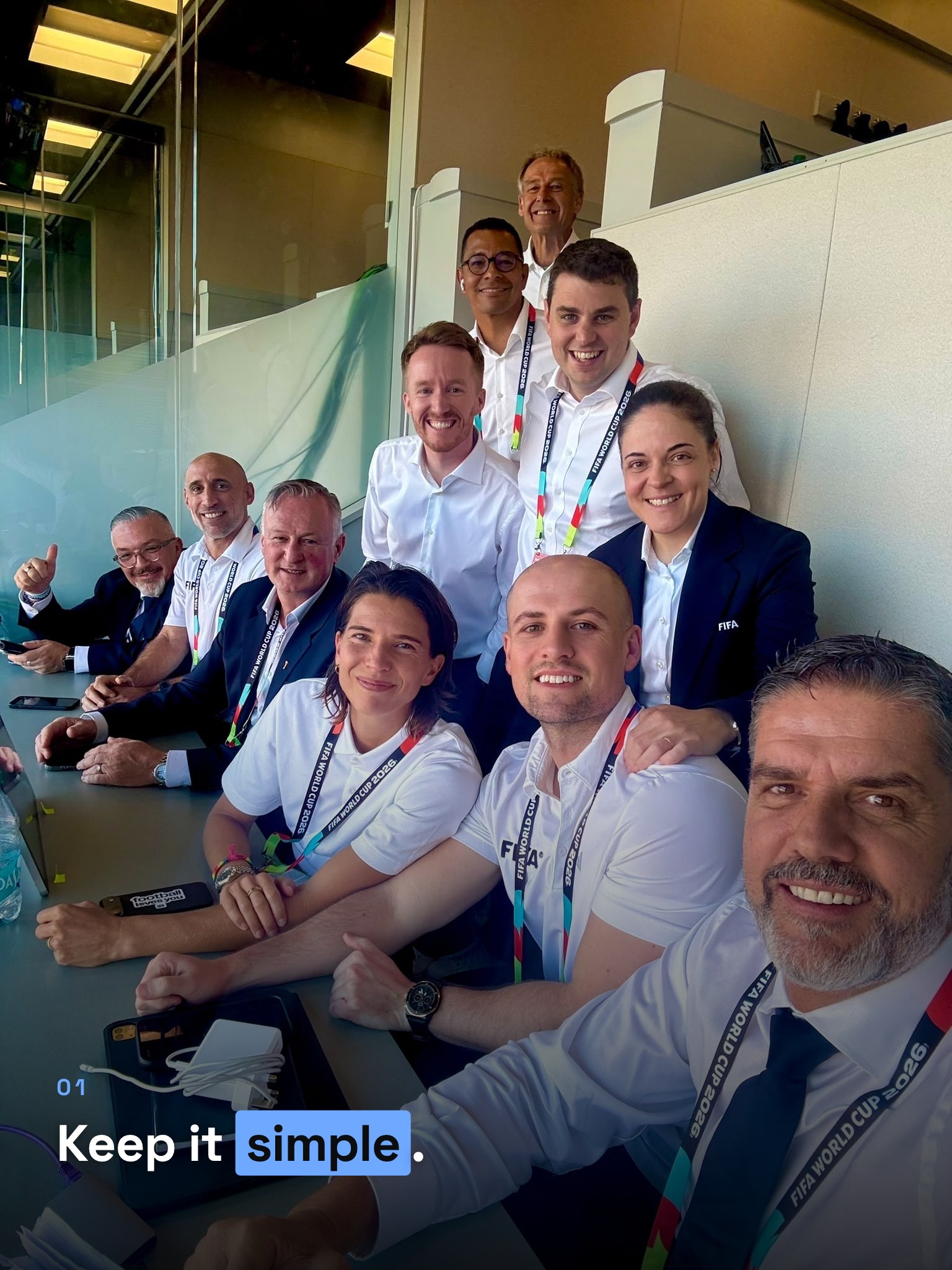
Elite coaches understand the game at a level most people never reach. But they’re still human beings.
Be clear. Get to the point. If it takes you five minutes to get to the finding, you’ve lost them.
It’s natural to want to show how much work you’ve done. More clips, more slides, more detail. I’ve been there.
Picture it. You’ve spent two days on the next opponent’s build-up. You’ve got 25 clips, a page of stats and three different patterns. You walk in and start from the beginning.
Now picture the coach’s day. Training to plan, a squad to manage, a press conference, staff meetings. They’ve got ten minutes for you.
What they need is: here’s how they build, here’s where we can hurt them, here are the three clips that show it. Everything else is there if they ask.
Keeping it simple means you’ve done the hard work so they don’t have to.
In a tournament, those ten minutes might be five, on the bus to training.
02 · Lesson 2
Bring it to life with a visual
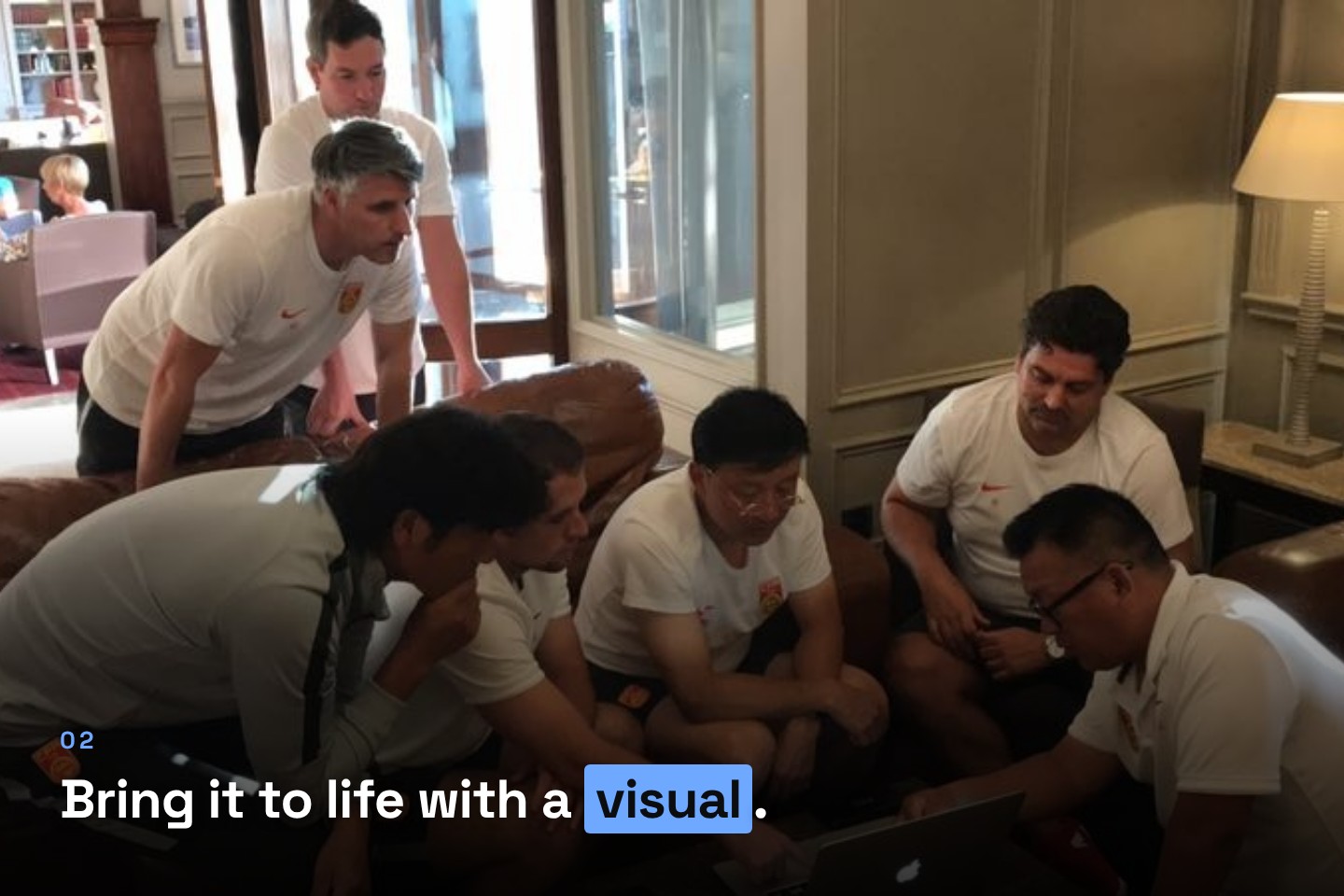
Most people are visual learners, and that includes me.
Whatever you’re explaining, be ready to show it: a clip or a frame from the game. If a coach can see it, they’ll get it far quicker.
Words on their own get interpreted. Tell a coach “their 6 drops in to make a back three” and they’ll picture something. It might not be what you saw.
That gets harder when you work with people from different countries and football cultures. The same word can mean different things, or there might not be a direct translation at all. Learn the terms the coaches you work with use, and agree them before you present.
Then show it. Freeze the frame as the 6 drops. Draw the shape. Show where the space opens up. Now everyone in the room is looking at the same picture.
Inside the environment, most of what the analysis team produces ends up as video. A team meeting before a game might be ten or fifteen minutes. Then there are unit meetings for the defenders or the midfield, and individual clips for players to watch on a tablet or their phone. Every one of those is visual.
It’s also what ends up in front of the players. If you can’t show it, it probably won’t reach the pitch.
03 · Lesson 3
Back your opinion with evidence

If you’re going to add your opinion to a finding, be ready to back it up.
The best coaches welcome being challenged. But be warned: they’ll expect you to prove your claim.
Football’s a game of opinions, so be prepared to disagree. As an analyst, though, your job is to be factual and to explain clearly why you’re saying something. Avoid blurring the lines.
A coach with years in the game won’t change a plan because their analyst has a feeling about something.
Say you think your team’s press is breaking down because the 10 is jumping too early. That’s an opinion. Now go and find it. How many times did it happen? What happened next each time? Bring the clips with timestamps, so the coach can see the moment the 10 goes and the pass that beats him.
And show the exception. If there are two times the 10 jumped early and you still won the ball, put those in too. They might tell you the real problem is the 8 not covering behind him. If you only pick the clips that support your point, you’ll get caught out the first time someone asks.
04 · Lesson 4
Data with no context loses trust
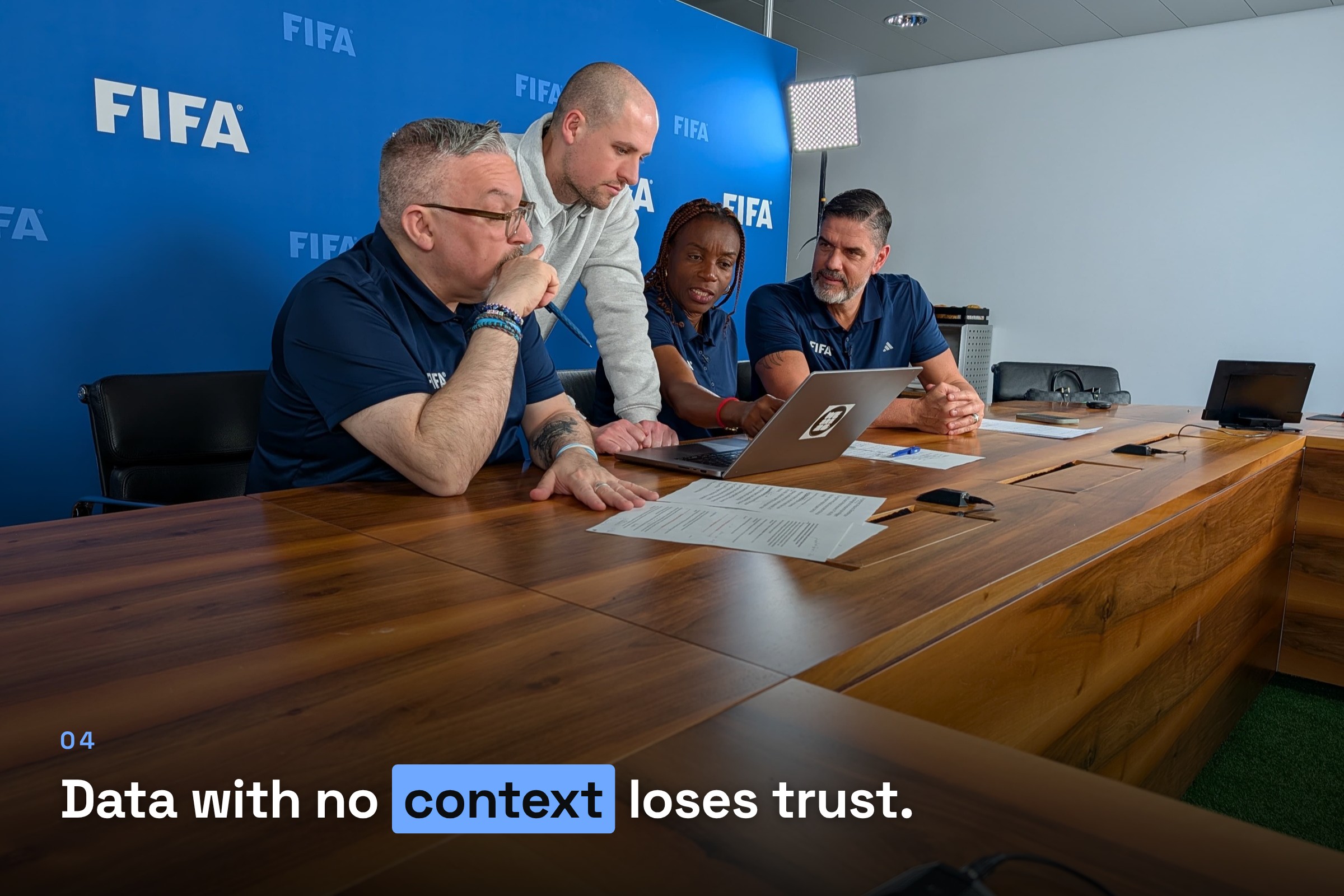
A common mistake analysts make is using data as evidence without giving any context.
It’s the quickest way to lose a coach’s trust. Even worse is when the data is wrong.
Data is often the first thing analysts reach for, because it feels objective. But a number on its own doesn’t explain anything.
“We only had 38% possession.” Was it 38% because we were 1-0 up for an hour and chose to sit in a block? Or because we couldn’t get out of our own half? Those are two completely different conversations.
“Their winger made 9 crosses.” Fine. From where? Under pressure or with time? Did any of them reach anyone?
What counts as the action? Which moments sit behind it? Is it being compared fairly? If a coach catches one wrong or unexplained number, they’ll question the next ten.
Show them where the number comes from.
05 · Lesson 5
Keep a calm head and pick your moment
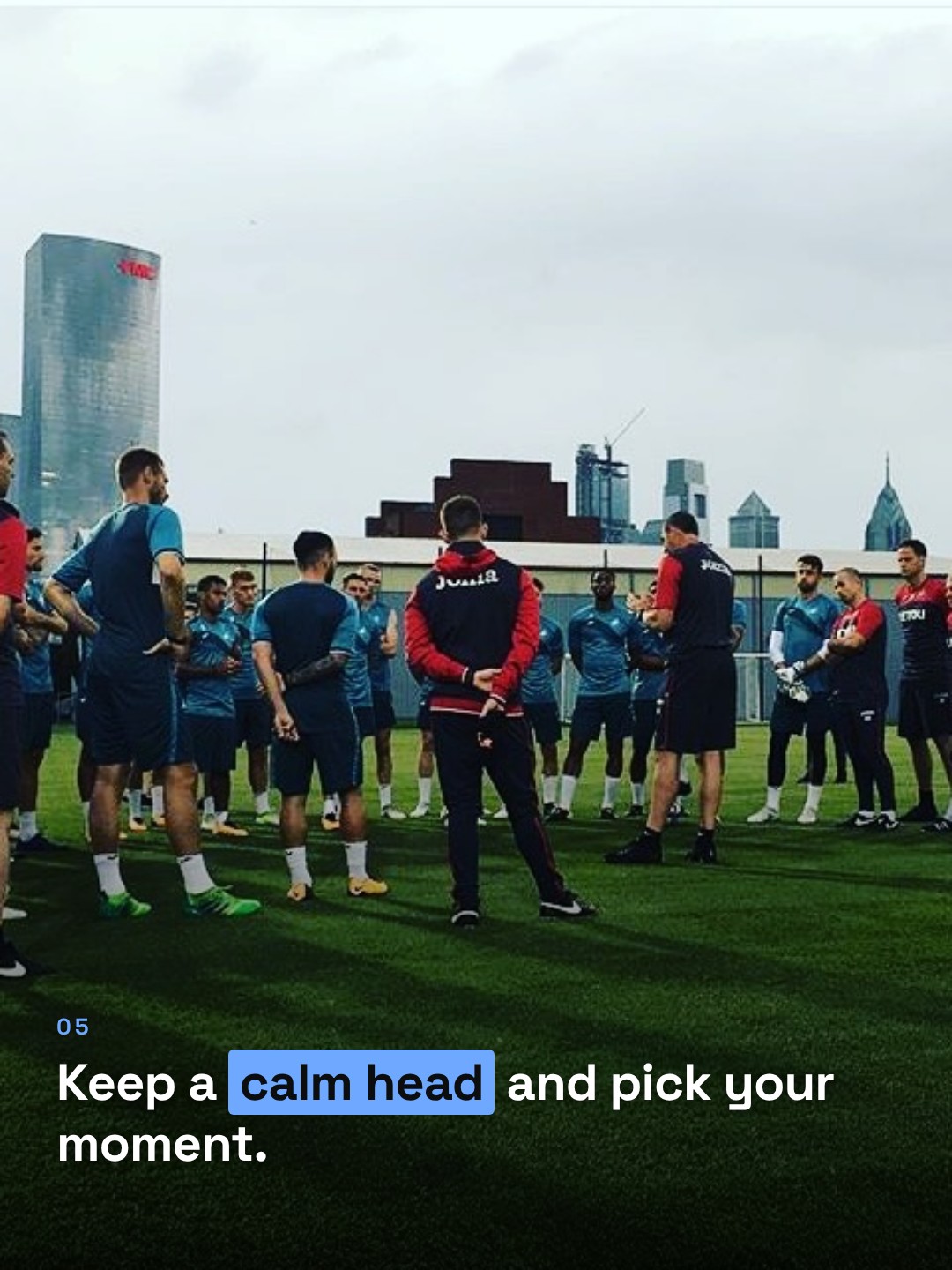
Football is a pressure cooker. Emotions run high, and they do it a lot.
Know your audience, and know when to approach people with information. Get the timing wrong and it won’t land.
How you present one week might need to be very different the next.
At the top level, every result is scrutinised. Jobs depend on it, the media are watching, and everyone in the building feels it. That pressure doesn’t stop at the coaching staff. It reaches the analysts too.
Think about the same finding at two different moments. Monday morning after a win, the staff are relaxed and it’s a useful note for the week. Saturday night after a defeat, in the dressing room corridor, it can feel like criticism.
Half-time is the same. There might be ten things you’ve seen. The coach has a few minutes and maybe room for one or two points. Pick the one that changes the second half, and have the clip ready. Half-time in an elite dressing room moves fast: the medical team, the staff, the coach’s own thoughts. You might get one minute.
Reading the room is part of the job. If you stay calm when everyone else isn’t, you become someone people want around when it matters.
06 · Lesson 6
People first, football second

This is the hill I’m prepared to die on.
If you have no people skills, you’re cooked.
There’s a running joke in football that analysts are robots. We’re the ones in the corner with headphones on, happiest behind a screen, clipping and coding while everyone else is out on the grass.
I’ve had it said to me more than once: “Remove that microchip.” It usually comes when I haven’t switched off, or when my delivery has gone a bit too systematic. Same structure, same tone, same order, whatever the room.
It’s said with a smile, but there’s a real point behind it. The analysis is only half the job. The other half is how you deliver it. A head coach in a staff meeting, a group of defenders the day before a game and a young player who’s just been dropped all need something different from you, even if the clips are the same.
Learning how to communicate in any setting, and with whoever is in the room, is one of the most crucial parts of analysis.
You need to understand people first and football second. Every person is different. How you communicate with one coach might need to change for the next. Players are a unique bunch, and they all respond to information very differently.
Pressure has a funny way of showing what people are like, and coaches and players are no different.
One coach might want a full written report the night before. Another wants three clips on a laptop and a two-minute chat in the corridor. One player will sit and watch every clip of his game. Another switches off after thirty seconds, but takes in one frame with an arrow on it.
None of that is in a coaching manual. You only learn it by spending time with people. Have a coffee with the staff. Ask players how they like to receive information. Notice who goes quiet after a defeat and who wants to talk straight away.
Lots of people can learn the software and the tactical theory. What separates analysts is whether people want to work with them.
07 · Lesson 7
You will get things wrong
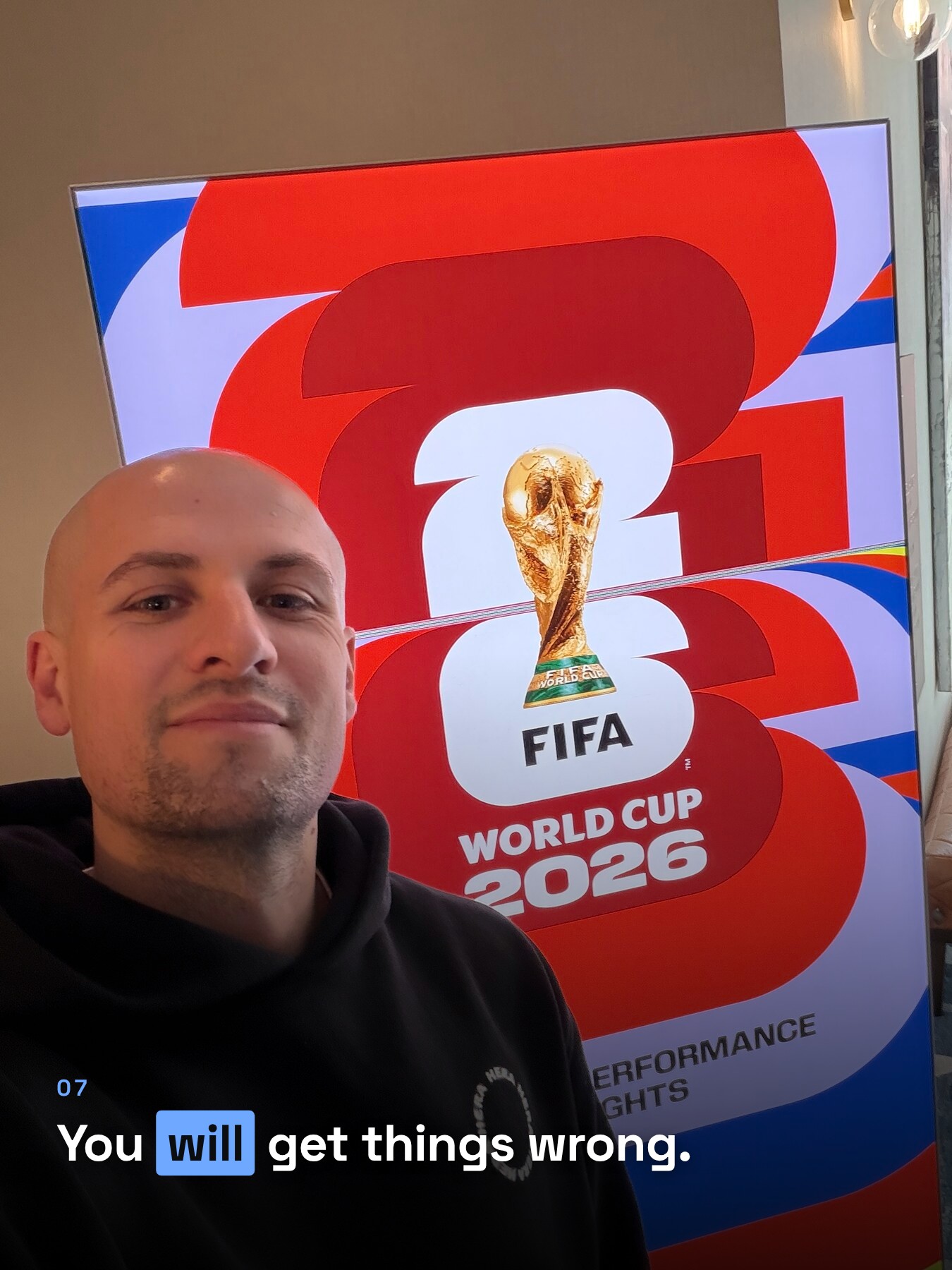
Things will 100% go wrong. You’re gonna fuck up.
None of us ever intends to make mistakes. But when they happen, own it and learn from it.
Then ask yourself what you can put in place so it doesn’t happen again.
It could be a clip of the wrong player in a pre-match meeting. A set-piece routine labelled the wrong way round. A stat that turns out to be from the wrong game.
In the moment, that can feel like the end of the world. It isn’t. How you handle it matters more than the mistake itself.
Say it straight away: “That’s on me, here’s the right one.” Then fix the process. Check every clip against the team sheet. Have someone else look over set pieces before they go in front of the players. Coaches respect the analyst who owns it and fixes it far more than the one who hides it.
Final thoughts
What comes next
Over the coming weeks I’ll take each of these lessons and show you what it looks like in real situations, in more detail.
The Debrief · Analysis explained
What I wish I knew before working with elite coaches and players
Seven lessons from working inside elite football, and what they look like day to day.
By Harry Lowe · 6 min read
Read the lessons →Introduction
When I started, I thought the job was understanding the tactical and technical trends of the game. Spot them, then report them back in a report or a presentation.
That was only the start.
Presenting findings can be a gift and a curse. You can describe what’s happening clearly and accurately, and still leave the coach with nothing more than a problem.
Say you’ve spotted that the opponent’s left-back pushes high every time they build up, and leaves space behind him. Great finding. But if that’s where you stop, all you’ve handed the coach is something else to worry about.
Things changed when coaches started asking me how we’d overcome those problems. What could we build into our strategy? And how would it look on the training pitch?
So now it’s: who attacks that space, when do they go, what does the trigger look like, and how do we rehearse it on Thursday? That’s the actual job: find the solution, then explain it well.
Nobody really tells you this. Most of what analysts learn is about finding things: coding games, clipping moments, building reports. That matters. But the part that decides whether a coach trusts you is everything that happens after you’ve found it.
Over the years I’ve worked with staff at club level, with China’s men’s national team and at FIFA tournaments. These are the things I’ve learned along the way.
01 · Lesson 1
Keep it simple
Elite coaches understand the game at a level most people never reach. But they’re still human beings.
Be clear. Get to the point. If it takes you five minutes to get to the finding, you’ve lost them.
It’s natural to want to show how much work you’ve done. More clips, more slides, more detail. I’ve been there.
Picture it. You’ve spent two days on the next opponent’s build-up. You’ve got 25 clips, a page of stats and three different patterns. You walk in and start from the beginning.
Now picture the coach’s day. Training to plan, a squad to manage, a press conference, staff meetings. They’ve got ten minutes for you.
What they need is: here’s how they build, here’s where we can hurt them, here are the three clips that show it. Everything else is there if they ask.
Keeping it simple means you’ve done the hard work so they don’t have to.
In a tournament, those ten minutes might be five, on the bus to training.
02 · Lesson 2
Bring it to life with a visual
Most people are visual learners, and that includes me.
Whatever you’re explaining, be ready to show it: a clip or a frame from the game. If a coach can see it, they’ll get it far quicker.
Words on their own get interpreted. Tell a coach “their 6 drops in to make a back three” and they’ll picture something. It might not be what you saw.
That gets harder when you work with people from different countries and football cultures. The same word can mean different things, or there might not be a direct translation at all. Learn the terms the coaches you work with use, and agree them before you present.
Then show it. Freeze the frame as the 6 drops. Draw the shape. Show where the space opens up. Now everyone in the room is looking at the same picture.
Inside the environment, most of what the analysis team produces ends up as video. A team meeting before a game might be ten or fifteen minutes. Then there are unit meetings for the defenders or the midfield, and individual clips for players to watch on a tablet or their phone. Every one of those is visual.
It’s also what ends up in front of the players. If you can’t show it, it probably won’t reach the pitch.
03 · Lesson 3
Back your opinion with evidence
If you’re going to add your opinion to a finding, be ready to back it up.
The best coaches welcome being challenged. But be warned: they’ll expect you to prove your claim.
Football’s a game of opinions, so be prepared to disagree. As an analyst, though, your job is to be factual and to explain clearly why you’re saying something. Avoid blurring the lines.
A coach with years in the game won’t change a plan because their analyst has a feeling about something.
Say you think your team’s press is breaking down because the 10 is jumping too early. That’s an opinion. Now go and find it. How many times did it happen? What happened next each time? Bring the clips with timestamps, so the coach can see the moment the 10 goes and the pass that beats him.
And show the exception. If there are two times the 10 jumped early and you still won the ball, put those in too. They might tell you the real problem is the 8 not covering behind him. If you only pick the clips that support your point, you’ll get caught out the first time someone asks.
04 · Lesson 4
Data with no context loses trust
A common mistake analysts make is using data as evidence without giving any context.
It’s the quickest way to lose a coach’s trust. Even worse is when the data is wrong.
Data is often the first thing analysts reach for, because it feels objective. But a number on its own doesn’t explain anything.
“We only had 38% possession.” Was it 38% because we were 1-0 up for an hour and chose to sit in a block? Or because we couldn’t get out of our own half? Those are two completely different conversations.
“Their winger made 9 crosses.” Fine. From where? Under pressure or with time? Did any of them reach anyone?
What counts as the action? Which moments sit behind it? Is it being compared fairly? If a coach catches one wrong or unexplained number, they’ll question the next ten.
Show them where the number comes from.
05 · Lesson 5
Keep a calm head and pick your moment
Football is a pressure cooker. Emotions run high, and they do it a lot.
Know your audience, and know when to approach people with information. Get the timing wrong and it won’t land.
How you present one week might need to be very different the next.
At the top level, every result is scrutinised. Jobs depend on it, the media are watching, and everyone in the building feels it. That pressure doesn’t stop at the coaching staff. It reaches the analysts too.
Think about the same finding at two different moments. Monday morning after a win, the staff are relaxed and it’s a useful note for the week. Saturday night after a defeat, in the dressing room corridor, it can feel like criticism.
Half-time is the same. There might be ten things you’ve seen. The coach has a few minutes and maybe room for one or two points. Pick the one that changes the second half, and have the clip ready. Half-time in an elite dressing room moves fast: the medical team, the staff, the coach’s own thoughts. You might get one minute.
Reading the room is part of the job. If you stay calm when everyone else isn’t, you become someone people want around when it matters.
06 · Lesson 6
People first, football second
This is the hill I’m prepared to die on.
If you have no people skills, you’re cooked.
There’s a running joke in football that analysts are robots. We’re the ones in the corner with headphones on, happiest behind a screen, clipping and coding while everyone else is out on the grass.
I’ve had it said to me more than once: “Remove that microchip.” It usually comes when I haven’t switched off, or when my delivery has gone a bit too systematic. Same structure, same tone, same order, whatever the room.
It’s said with a smile, but there’s a real point behind it. The analysis is only half the job. The other half is how you deliver it. A head coach in a staff meeting, a group of defenders the day before a game and a young player who’s just been dropped all need something different from you, even if the clips are the same.
Learning how to communicate in any setting, and with whoever is in the room, is one of the most crucial parts of analysis.
You need to understand people first and football second. Every person is different. How you communicate with one coach might need to change for the next. Players are a unique bunch, and they all respond to information very differently.
Pressure has a funny way of showing what people are like, and coaches and players are no different.
One coach might want a full written report the night before. Another wants three clips on a laptop and a two-minute chat in the corridor. One player will sit and watch every clip of his game. Another switches off after thirty seconds, but takes in one frame with an arrow on it.
None of that is in a coaching manual. You only learn it by spending time with people. Have a coffee with the staff. Ask players how they like to receive information. Notice who goes quiet after a defeat and who wants to talk straight away.
Lots of people can learn the software and the tactical theory. What separates analysts is whether people want to work with them.
07 · Lesson 7
You will get things wrong
Things will 100% go wrong. You’re gonna fuck up.
None of us ever intends to make mistakes. But when they happen, own it and learn from it.
Then ask yourself what you can put in place so it doesn’t happen again.
It could be a clip of the wrong player in a pre-match meeting. A set-piece routine labelled the wrong way round. A stat that turns out to be from the wrong game.
In the moment, that can feel like the end of the world. It isn’t. How you handle it matters more than the mistake itself.
Say it straight away: “That’s on me, here’s the right one.” Then fix the process. Check every clip against the team sheet. Have someone else look over set pieces before they go in front of the players. Coaches respect the analyst who owns it and fixes it far more than the one who hides it.
Final thoughts
What comes next
Over the coming weeks I’ll take each of these lessons and show you what it looks like in real situations, in more detail.