The Debrief · Analysis explained
What makes a useful analyst?
Judge the work: the question, evidence and explanation.
By Harry Lowe · 3 min read
Read the article →
Introduction
An analyst has to turn what they see into information someone else can use. The skills involved become easier to judge when you look at an actual piece of work.
Can you answer a clear football question? Can someone follow your evidence? Have you explained the mechanism, and is the output suitable for the person receiving it?
In a FIFA Training Centre interview about the role, which I contributed to, the introduction describes the importance of translating information into clear, objective analysis for coaches. That gives you a useful way to think about your own development.
01
Ask a question you can investigate
Begin with something specific enough to guide the work. If your question is 'How did the team play?', almost anything in the match could become relevant.
Try narrowing it: how did the team defend when the opponent attacked down the right? You can now identify the relevant moments and decide what to record.
You should also know who the work is for. Someone studying the game may want a detailed explanation of the pattern. A coach preparing a session may need the conditions that allow it to happen and an example the players can understand.

02
Watch the players around the action
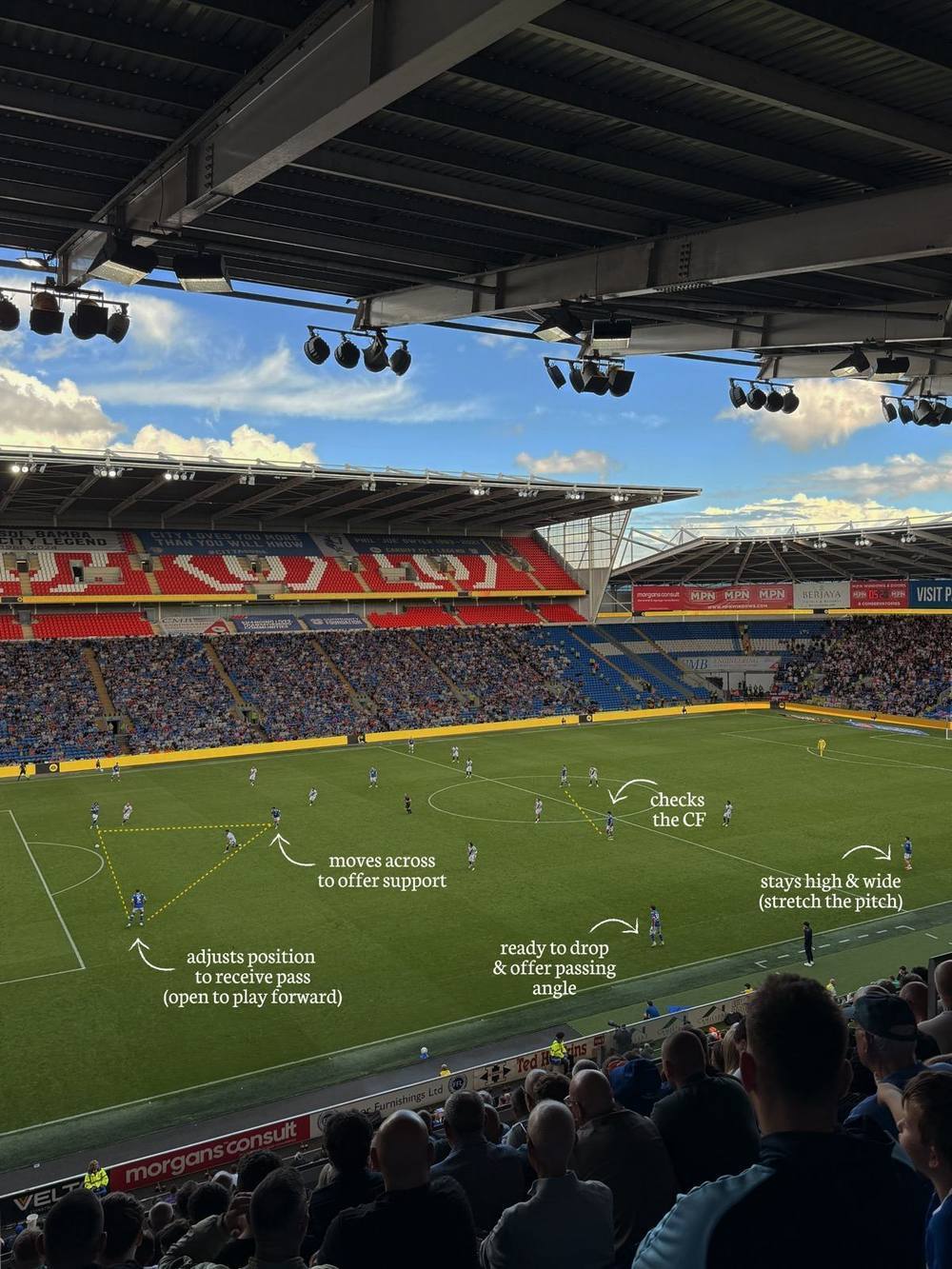
The ball shows you where the immediate action is, but the explanation often involves players elsewhere. A receiver may become available because another player moves and takes a defender with them.
Follow the supporting players and the opposition's response. Pause before the pass as well as after it. If the footage gives you a wide enough view, consider the position of the next defensive line. If it does not, say which part you cannot see.
This is something I show you in my work when I observe in stadiums: the runs, support and movement of the units help you understand why the player in possession has particular options.
03
Be precise about the evidence
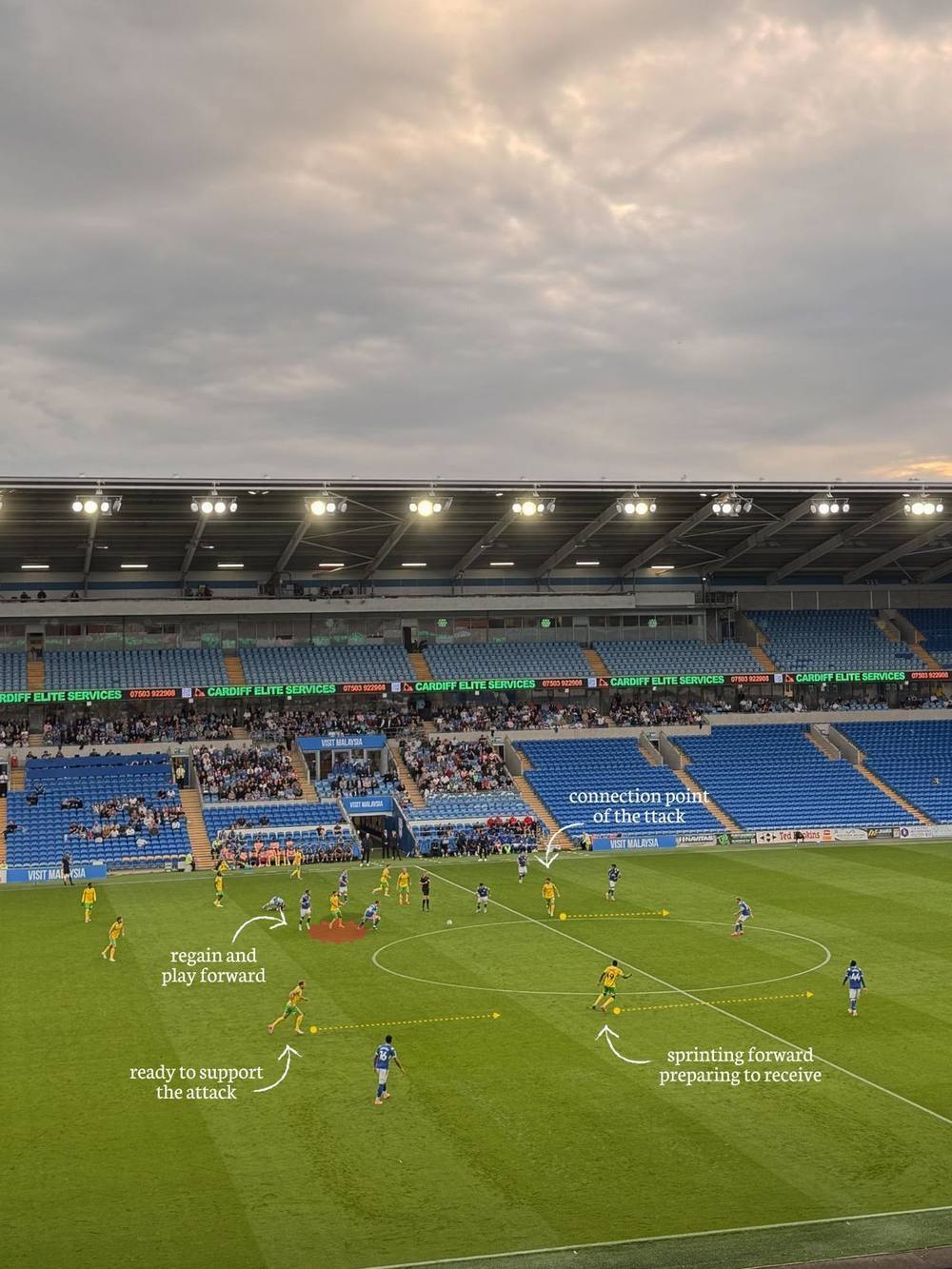
If you count an action, define it first. In your wide-attack study, stopping a cross, winning the first contact and preventing a shot describe different defensive outcomes. Decide which question you are answering before grouping them together.
FIFA's Football Language explanation discusses why provider definitions affect comparisons and why actions away from the ball matter. Apply the same principle to your own work: be consistent in what you analyse and in the definitions you use, and keep the timestamp with every example.
Consistency matters just as much when you explain the analysis to coaches. Learn the terminology the coaches you work with use. The way you describe the game may not be the way your audience understands it: they may use different words, or define the same action differently. This is particularly common when you work with practitioners from different countries and football cultures, so agree the terms before you present a finding.
Include examples that challenge your initial finding. If you only select successful sequences, you may miss the condition that determines whether the route is available.
04
Offer a solution, not just the problem
Effective analysis does not just show what is happening. It offers a solution to the problem you face.
A lot of analysis highlights moments in the game. When you present it to the coaching staff or the players, you are, in effect, presenting problems. You may be describing clearly and sensibly what you or your opponent is doing, but there is still a problem to resolve: counteracting a strength the opponent has, or improving a weakness of your own.
Without a solution, the analysis stays a description of what is happening. Great analysis turns those observations into solutions to the problems they reveal.
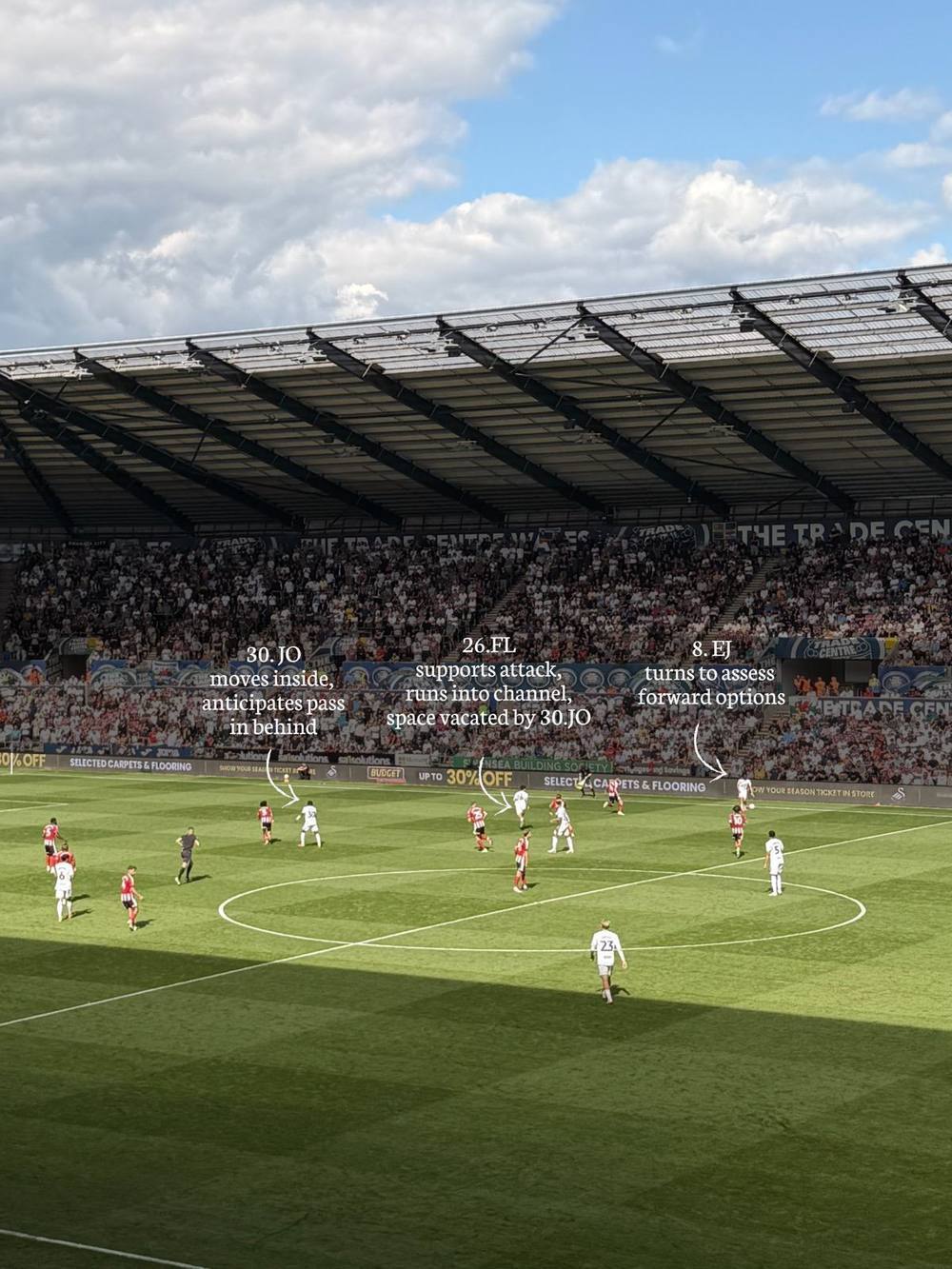
I learned this from Graham Potter at Swansea. I would present him with detailed observations of what an opponent was doing. To me, that was valuable information. To him, it was another problem to fix, and he would ask:
What could we do about it?
That question changed the work I brought to him. I had to connect every pattern I saw to a response the team could use, and be able to explain why I was proposing it. It has been part of my analysis ever since, from Swansea to China and now at FIFA. A proposed solution also needs conditions: can your players carry it out, and what risk does it create elsewhere?
05
Make the output easy to review
For a practice task, prepare a short finding from one match with a timestamped example and an exception. Write it in language a coach or another analyst can follow without asking you to translate every term.
Ask a reviewer where the evidence becomes unclear. Can they see the action you describe? Does your diagram match the sequence? Are you claiming intent that the footage cannot establish?
Revise the finding using that feedback. Keep a note of the change and why you made it. You then have a piece of work that shows your observation, explanation and ability to improve it, rather than a list of skills you say you possess.

The Debrief · Analysis explained
What makes a useful analyst?
Judge the work: the question, evidence and explanation.
By Harry Lowe · 3 min read
Read the article →Introduction
An analyst has to turn what they see into information someone else can use. The skills involved become easier to judge when you look at an actual piece of work.
Can you answer a clear football question? Can someone follow your evidence? Have you explained the mechanism, and is the output suitable for the person receiving it?
In a FIFA Training Centre interview about the role, which I contributed to, the introduction describes the importance of translating information into clear, objective analysis for coaches. That gives you a useful way to think about your own development.
01
Ask a question you can investigate
Begin with something specific enough to guide the work. If your question is 'How did the team play?', almost anything in the match could become relevant.
Try narrowing it: how did the team defend when the opponent attacked down the right? You can now identify the relevant moments and decide what to record.
You should also know who the work is for. Someone studying the game may want a detailed explanation of the pattern. A coach preparing a session may need the conditions that allow it to happen and an example the players can understand.
02
Watch the players around the action
The ball shows you where the immediate action is, but the explanation often involves players elsewhere. A receiver may become available because another player moves and takes a defender with them.
Follow the supporting players and the opposition's response. Pause before the pass as well as after it. If the footage gives you a wide enough view, consider the position of the next defensive line. If it does not, say which part you cannot see.
This is something I show you in my work when I observe in stadiums: the runs, support and movement of the units help you understand why the player in possession has particular options.
03
Be precise about the evidence
If you count an action, define it first. In your wide-attack study, stopping a cross, winning the first contact and preventing a shot describe different defensive outcomes. Decide which question you are answering before grouping them together.
FIFA's Football Language explanation discusses why provider definitions affect comparisons and why actions away from the ball matter. Apply the same principle to your own work: be consistent in what you analyse and in the definitions you use, and keep the timestamp with every example.
Consistency matters just as much when you explain the analysis to coaches. Learn the terminology the coaches you work with use. The way you describe the game may not be the way your audience understands it: they may use different words, or define the same action differently. This is particularly common when you work with practitioners from different countries and football cultures, so agree the terms before you present a finding.
Include examples that challenge your initial finding. If you only select successful sequences, you may miss the condition that determines whether the route is available.
04
Offer a solution, not just the problem
Effective analysis does not just show what is happening. It offers a solution to the problem you face.
A lot of analysis highlights moments in the game. When you present it to the coaching staff or the players, you are, in effect, presenting problems. You may be describing clearly and sensibly what you or your opponent is doing, but there is still a problem to resolve: counteracting a strength the opponent has, or improving a weakness of your own.
Without a solution, the analysis stays a description of what is happening. Great analysis turns those observations into solutions to the problems they reveal.
I learned this from Graham Potter at Swansea. I would present him with detailed observations of what an opponent was doing. To me, that was valuable information. To him, it was another problem to fix, and he would ask:
What could we do about it?
That question changed the work I brought to him. I had to connect every pattern I saw to a response the team could use, and be able to explain why I was proposing it. It has been part of my analysis ever since, from Swansea to China and now at FIFA. A proposed solution also needs conditions: can your players carry it out, and what risk does it create elsewhere?
05
Make the output easy to review
For a practice task, prepare a short finding from one match with a timestamped example and an exception. Write it in language a coach or another analyst can follow without asking you to translate every term.
Ask a reviewer where the evidence becomes unclear. Can they see the action you describe? Does your diagram match the sequence? Are you claiming intent that the footage cannot establish?
Revise the finding using that feedback. Keep a note of the change and why you made it. You then have a piece of work that shows your observation, explanation and ability to improve it, rather than a list of skills you say you possess.