The Debrief · Football explained
Why teams use width
How the players near the touchlines stretch a defence, and what that opens up inside.
By Harry Lowe · 6 min read
Read the article →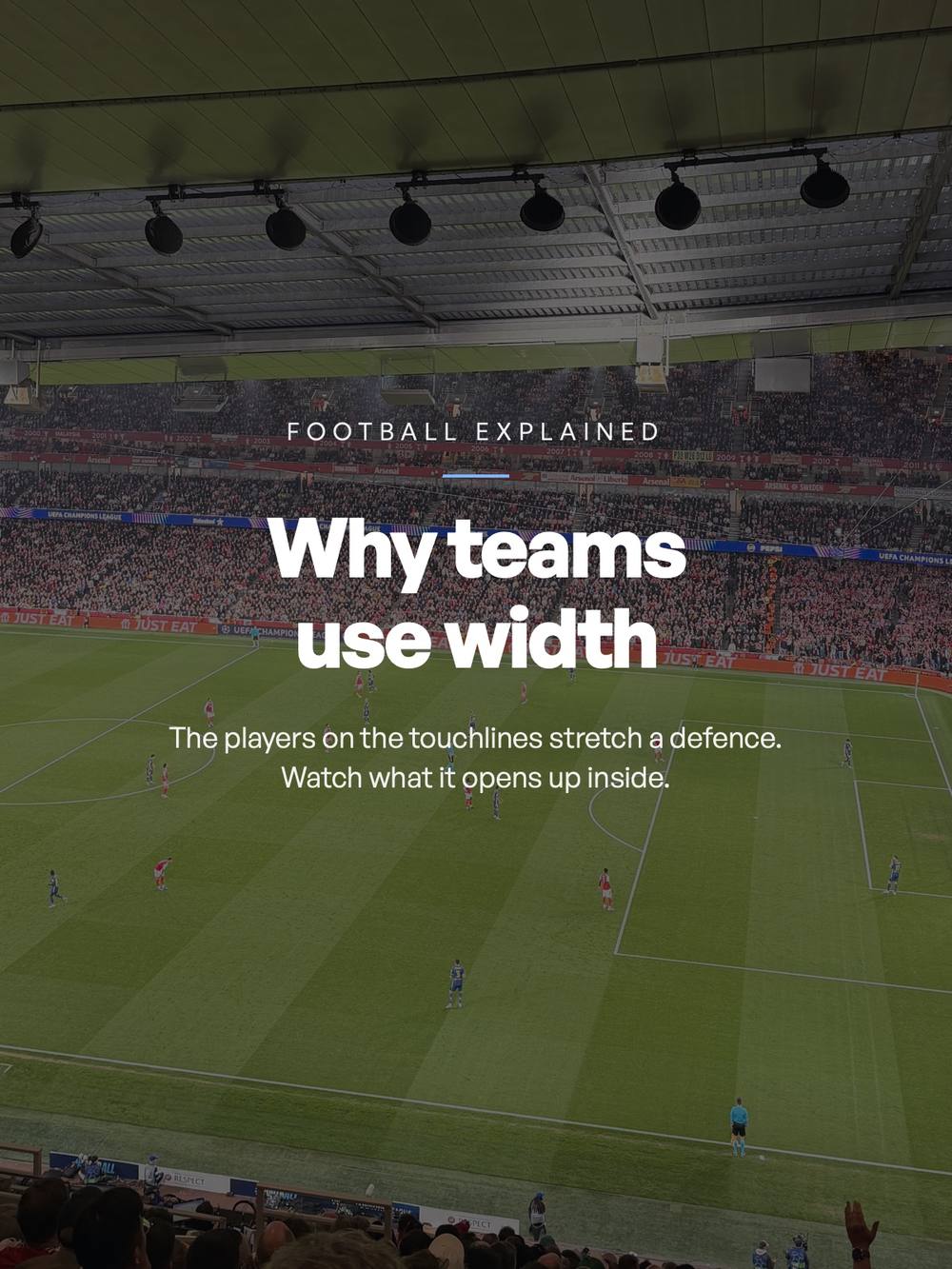
Introduction
When a team has the ball, the players on the outside are doing a job even when the ball is nowhere near them. Where they stand decides how wide the defending team has to be.
A defence can only cover so much of the pitch. The wider the team on the ball stands, the further apart the defenders have to be, and the bigger the gaps between them.
Here are five things to watch for. In every board, Blue has the ball and attacks up the page.
01 · Stretching
Watch the full-backs follow
- What you see
- The team’s widest players stand right on the touchlines, and the opposition full-backs move out with them.
- How the team does it
- Wingers, or sometimes full-backs, hold positions near the touchline instead of drifting inside towards the ball.
- Why the team does it
- A back four standing close together is hard to play through. Width forces them to spread out.
- What is the benefit
- The gaps between the defenders grow, which gives the team more space to pass or run into.
02 · Who holds it
Winger or full-back?
- What you see
- The wingers come inside and the full-backs push on to take the touchlines.
- How the team does it
- As the wingers move into the spaces between the lines, the full-backs run forward to replace them out wide.
- Why the team does it
- The team stays just as wide but puts extra players in the middle, where they can link the play.
- What is the benefit
- Defenders have to choose between following the winger inside or staying with the full-back. Either way, someone is free.
03 · The gap inside
Look for the run into the channel
- What you see
- With the full-back pulled wide, a midfielder or forward runs into the space between the full-back and the centre-back.
- How the team does it
- The wide player holds the full-back out on the touchline. A runner times their move into the gap, and the pass is played into the space in front of them.
- Why the team does it
- The space between full-back and centre-back is often the hardest for a defence to cover, because it is not clear whose job it is.
- What is the benefit
- A run into that channel can reach the edge of the box with the ball, facing goal.
04 · The switch
Keep the far side wide
- What you see
- When the ball is on one side, the winger on the far side stays wide, even though the play is a long way from them.
- How the team does it
- The defending team shifts across towards the ball. The far-side winger holds the width, then one long pass switches play to them.
- Why the team does it
- A defence that shifts across leaves space on the far side. Someone has to be there to use it.
- What is the benefit
- The winger receives with space and time, often one against one with a full-back who has had to run across to them.
05 · Width at the back
Check how wide the build-up starts
- What you see
- When building from the back, the centre-backs split wide towards the edges of the box and a midfielder drops between them.
- How the team does it
- The midfielder drops into the back line, the centre-backs move wider and the full-backs push higher up the touchlines.
- Why the team does it
- Width at the back makes it harder for the opponent’s forwards to press all three players.
- What is the benefit
- One of the three usually has time on the ball, so the team can pass forward instead of going long.
06 · Put it into practice
Try it on a match
Take one team and pause the match each time they have settled possession in the opponent’s half. Who is the widest player on each side? Note the time and the player.
Then ask what the width did. Did a defender follow the wide player and open a gap inside? Did the team switch the ball to a free player on the far side?
Then use What? How? Why? to explain one example. Width is also how teams escape pressure, so read How to read a team’s pressure alongside it.
The Debrief · Football explained
Why teams use width
How the players near the touchlines stretch a defence, and what that opens up inside.
By Harry Lowe · 6 min read
Read the article →Introduction
When a team has the ball, the players on the outside are doing a job even when the ball is nowhere near them. Where they stand decides how wide the defending team has to be.
A defence can only cover so much of the pitch. The wider the team on the ball stands, the further apart the defenders have to be, and the bigger the gaps between them.
Here are five things to watch for. In every board, Blue has the ball and attacks up the page.
01 · Stretching
Watch the full-backs follow
- What you see
- The team’s widest players stand right on the touchlines, and the opposition full-backs move out with them.
- How the team does it
- Wingers, or sometimes full-backs, hold positions near the touchline instead of drifting inside towards the ball.
- Why the team does it
- A back four standing close together is hard to play through. Width forces them to spread out.
- What is the benefit
- The gaps between the defenders grow, which gives the team more space to pass or run into.
02 · Who holds it
Winger or full-back?
- What you see
- The wingers come inside and the full-backs push on to take the touchlines.
- How the team does it
- As the wingers move into the spaces between the lines, the full-backs run forward to replace them out wide.
- Why the team does it
- The team stays just as wide but puts extra players in the middle, where they can link the play.
- What is the benefit
- Defenders have to choose between following the winger inside or staying with the full-back. Either way, someone is free.
03 · The gap inside
Look for the run into the channel
- What you see
- With the full-back pulled wide, a midfielder or forward runs into the space between the full-back and the centre-back.
- How the team does it
- The wide player holds the full-back out on the touchline. A runner times their move into the gap, and the pass is played into the space in front of them.
- Why the team does it
- The space between full-back and centre-back is often the hardest for a defence to cover, because it is not clear whose job it is.
- What is the benefit
- A run into that channel can reach the edge of the box with the ball, facing goal.
04 · The switch
Keep the far side wide
- What you see
- When the ball is on one side, the winger on the far side stays wide, even though the play is a long way from them.
- How the team does it
- The defending team shifts across towards the ball. The far-side winger holds the width, then one long pass switches play to them.
- Why the team does it
- A defence that shifts across leaves space on the far side. Someone has to be there to use it.
- What is the benefit
- The winger receives with space and time, often one against one with a full-back who has had to run across to them.
05 · Width at the back
Check how wide the build-up starts
- What you see
- When building from the back, the centre-backs split wide towards the edges of the box and a midfielder drops between them.
- How the team does it
- The midfielder drops into the back line, the centre-backs move wider and the full-backs push higher up the touchlines.
- Why the team does it
- Width at the back makes it harder for the opponent’s forwards to press all three players.
- What is the benefit
- One of the three usually has time on the ball, so the team can pass forward instead of going long.
06 · Put it into practice
Try it on a match
Take one team and pause the match each time they have settled possession in the opponent’s half. Who is the widest player on each side? Note the time and the player.
Then ask what the width did. Did a defender follow the wide player and open a gap inside? Did the team switch the ball to a free player on the far side?
Then use What? How? Why? to explain one example. Width is also how teams escape pressure, so read How to read a team’s pressure alongside it.