The Debrief · Debrief 03
Debrief 03
How to read defensive pressure
Who goes first, what sets them off, and where the ball goes next.
By Harry Lowe · 5 November 2026 · 8 min read
Read the article →
Introduction
Hey, legends 🤙🏼
Every week someone on TV says “they pressed well”. It’s become one of those lines that sounds like analysis but tells you nothing.
Pressing isn’t just running at the ball. It’s a plan: a signal everyone waits for, one player who goes first, others who follow, and a place you want the ball to end up. When it works, it looks like the other team made a mistake.
That’s exactly what happened at Anfield. So this week we start with that goal, then go through the six things I look for in any press, then you get to break it down yourself.
01 · Tactical breakdown
How Arsenal’s press won it at Anfield
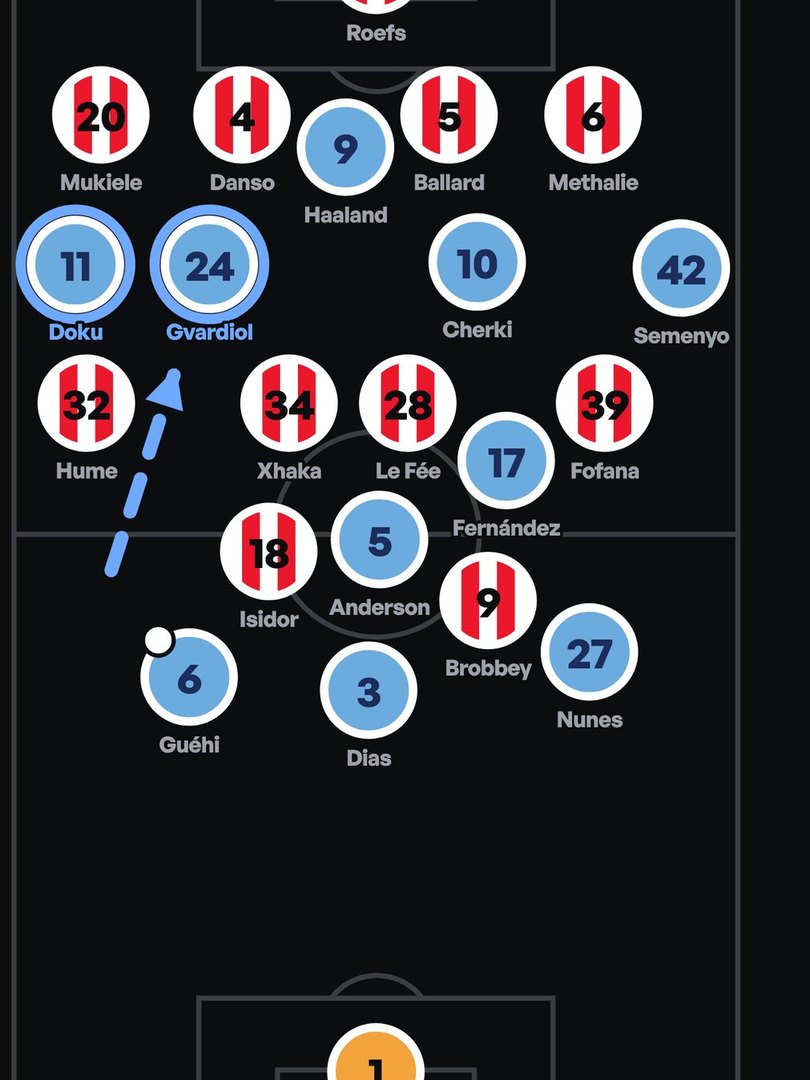
Sixteen minutes in at Anfield, Alisson takes a goal kick short and tries to find Jacquet. The pass is loose, and Ødegaard is already there. A few passes later, Havertz taps in at the back post. That’s the only goal of the game.
Everyone labelled it a goalkeeping error. Look closer and it’s the press that caused it.
- Tzolis
- Pay close attention to Tzolis. His trigger is the pass from Van Dijk, and he arcs his run so Alisson has to play centrally, cutting out the easy pass to Jacquet on the outside. That’s the curved run from number 2 below.
- Ødegaard
- Then Ødegaard. He had a player-marking job on Mac Allister, staying tight so he couldn’t receive without pressure. When Mac Allister dropped to support Alisson, Ødegaard went with him, which put him right on the loose pass. Two roles in one movement. That’s number 4.
- The takeaway
- You don’t need to win the ball every time. You need to be in the right place for the one time the pass isn’t perfect.
Three more moments from the same game
Shut the middle, show them wide
The middle is shut, so the ball goes wide to Kerkez.
Let them cross, win the header
Kerkez’s outswinger, Konsa and Gabriel win it.
Beat the press by going long
Raya over the press to Havertz, with Madueke and Tzolis running off him.
02 · Lesson
Six things to watch, in order
Pressure is one of the first things I look at when a team doesn’t have the ball. It tells you how they want to defend: how high, how quickly and with how many players. “They pressed well” says very little. The useful questions are what set it off, who went first, who followed and where the ball ended up.
1. The trigger: find what sets the press off
The team waits, then suddenly goes. Several players move forward at the same moment, not one by one. That’s the first clue that it’s a plan and not just energy.
The signal is usually one of four things: a pass back to the keeper, a heavy touch, a pass out to the touchline, or a player receiving with their back to goal. All four have the same thing in common. The player on the ball has fewer options and less time than a second ago, so that’s the moment to go.
Why does it matter? A press that goes at the right moment catches the opponent half-turned with the ball under their feet. A press that goes all the time runs out of legs by the hour mark. At Anfield, Tzolis’s trigger was Van Dijk’s pass back to Alisson.
For an analyst, the trigger is what makes a press predictable. Write it as one line a coach could use: “When the ball goes back to the keeper, the 9 goes.”
2. The first player: who goes first, and how
One player always leads, and the run is rarely straight. Watch it bend.
The first presser closes the ball while keeping a pass behind them blocked with their body, usually the one into midfield. That’s the curve: they come from the inside out, so the player on the ball can only go one way. Their angle decides which side the opponent plays to, and it pushes the ball where the pressing team wants it.
A good first run does the work of two players. It pressures the ball and closes a pass at the same time. That’s exactly what Tzolis did. He arced his run so Alisson had to play centrally and lost the easy pass to Jacquet on the outside.
When you watch, don’t just ask “did he get there?”. Ask “what did his run take away?”.
3. The number ten: where does the ten start?
Out of possession, look for the number ten moving from behind the striker to level with them.
The ten and the striker go together, one on each centre-back. Neither centre-back has a free pass to the other, so the back line can’t shuffle the ball across to escape. Against a team that builds with two centre-backs, it’s two against two at the front.
What it gives the pressing team is direction. With the pass across shut, the ball has three places to go: back to the keeper, out to a full-back, or long. Back to the keeper is often the trigger again, out wide is where the trap waits, and long is a contest the defenders are set up to win.
If the ten stays behind the striker, look at what happens instead. Usually one centre-back has all the time in the world, and the press is over before it starts.
4. The man-marker: find the player following one opponent
In midfield, look for one player going wherever a particular opponent goes, even out wide or deep into their half.
Instead of holding a zone, that midfielder stays tight to their player and follows them across the pitch. It’s normally aimed at the opponent’s best passer, or the player who links the build-up, the one the keeper and centre-backs are looking for when they’re under pressure.
That’s what lets the press go higher. The free player the build-up is looking for has someone attached to him. At Anfield, Ødegaard’s job was Mac Allister. When Mac Allister dropped to help Alisson, Ødegaard went with him, and that’s why he was standing on the loose pass. Two roles in one movement.
A good way to spot it: pick the opponent’s main midfielder and watch who’s closest to him every time the keeper has the ball. If it’s the same player every time, you’ve found your man-marker.
5. The back line: check the players behind the press
When the front players press, look behind them. The defenders should be moving up at the same time, sometimes as far as halfway.
The back four step up together and keep the gap between them and the midfield small. One player pressing alone is easy to play around. If the team behind stays deep, a gap opens between the lines, and one pass into that space beats the whole press.
When the back line goes with it, the team stays short. There’s less space to play through, and a forward chasing a long ball is often caught offside or still a long way from goal when it lands.
This is the part most people never look at, because the camera follows the ball. If you can, watch it back on a wide angle. The press is only as good as the line behind it.
6. The trap: watch for the touchline trap
Some teams want you to pass out wide. They leave the full-back open on purpose, then close in with three players as soon as the ball arrives.
The pass to the full-back is the trigger. The winger, a midfielder and the full-back close in together, while others block the pass back inside. The touchline works as an extra defender: the player on the ball has half the pitch they’d have in the middle, and no way out behind them.
Win the ball there and it often leads straight to a chance, because the other team’s defence is spread out and moving the wrong way.
To spot it, look at who’s free before the pass and who’s free after it. If the full-back looked free and then suddenly isn’t, that’s a trap, not a gap.
03 · Free resource and task
Playing Out From the Back
That Anfield goal is a press beating a build-up. Playing out from the back is the free Portal task for the other side of it: how a team tries to move the ball away from its own goal while the opponent presses.
It breaks every build-up into five parts:
The five parts- Starting shape. Where are the keeper and nearby defenders? Who gives width, depth and a central option?
- Pressure. Who engages the ball, and who protects a passing route?
- Route. Does the team play through, around or beyond the pressure, carry it, or recycle?
- Reception. What can the receiver see and do next? Who offers another angle?
- Outcome and cover. Is the next action controlled, contested or stopped? What space is exposed if the ball is lost?
Then it walks you through one worked example and gives you a free PowerPoint template, with pitches to draw on, to identify, show, explain and propose your own.
Task: break down the Anfield goal kick, then find your own
Part 1: use the template on the goal. Download the template from the resource and fill it in for Liverpool’s goal kick in the 16th minute. Here’s a start:
- Starting shape
- Alisson goes short. Liverpool’s centre-backs are split and the full-backs are already high or wide, ready to build.
- Pressure
- Tzolis’s trigger is Van Dijk’s pass. He arcs his run to force Alisson central. Ødegaard is tight on Mac Allister.
- Route
- Short, to Jacquet, but the pass is an extra yard off.
- Reception
- Ødegaard gets there first.
- Outcome and cover
- A turnover with Liverpool out of shape. A few passes later, Havertz scores.
Finish it with What, How, Why. What happened, how Arsenal’s press made it happen, and why Liverpool were so exposed when they lost it.
Part 2: flip it round. In the same game, Arsenal faced Liverpool’s press and Raya went long to Havertz, Tzolis or Madueke instead. Use the same five parts on one of those moments. Why would a team choose to go long rather than play out?
Part 3: your own match. Pick one team this weekend and watch the first 20 minutes when they don’t have the ball. Every time they press, note the time, the trigger, who went first and where the ball went next. After five or six, look for the pattern: same trigger, same first player, same outcome? Then pick the best one and run it through the template.
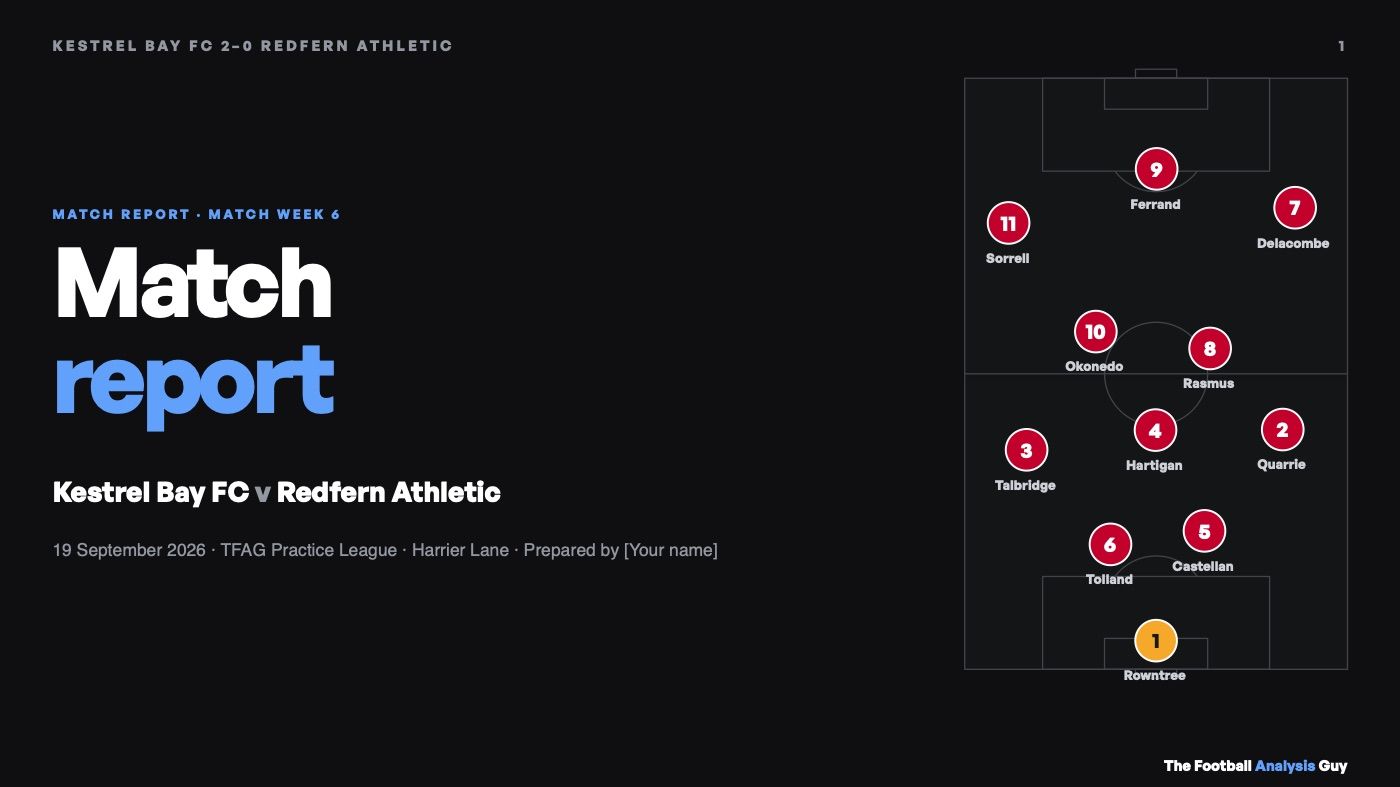
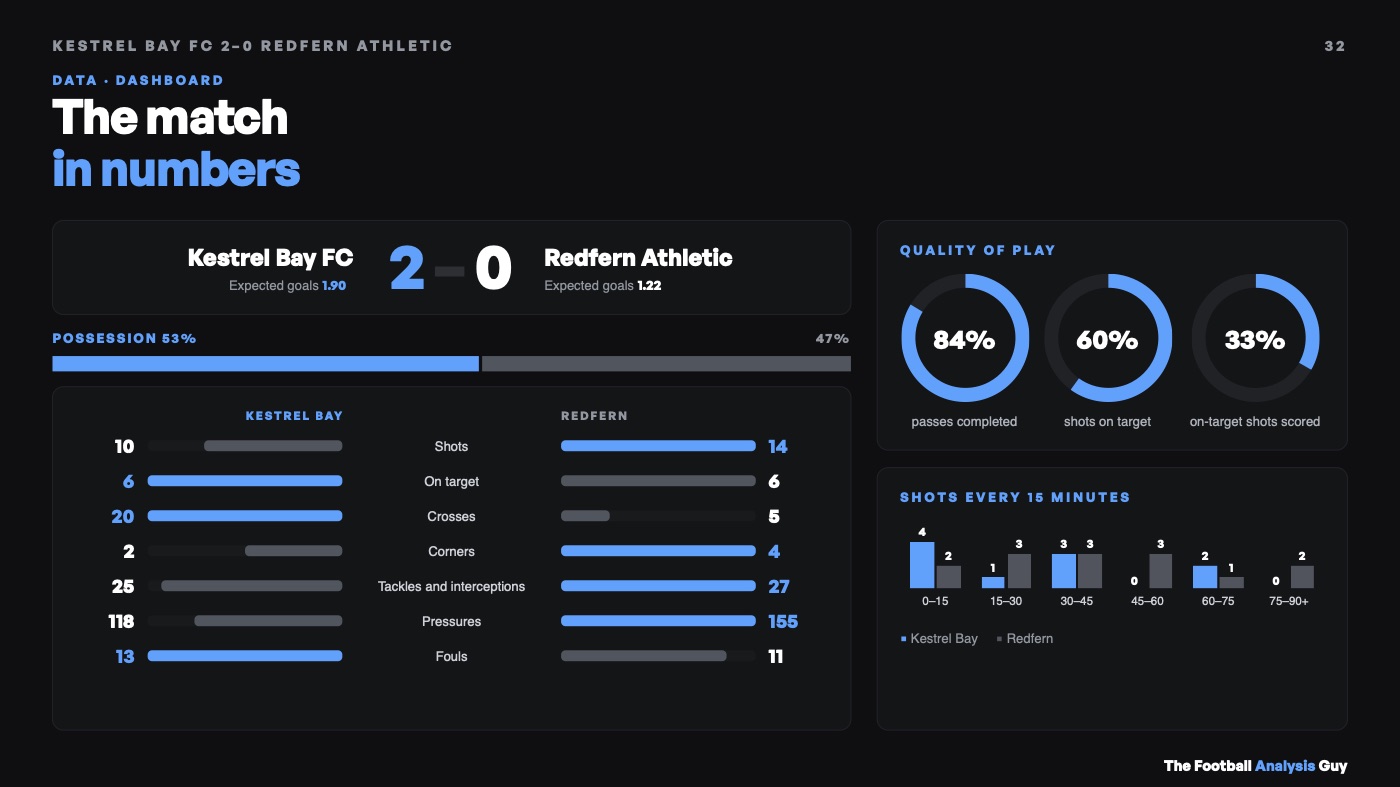
Match Report Lite and Match Report Master are in The Tools, with templates for PowerPoint and Keynote ready to fill in.
04
My week
Over 300 of you have joined since we launched. Genuinely didn’t expect that, so thank you. If there’s something you want me to cover, hit reply and tell me. I read every one.
Debrief 04 is on the way, landing in your inbox next Thursday...
A busy week. Here’s everything that went out since the last Debrief, and what each one was about.
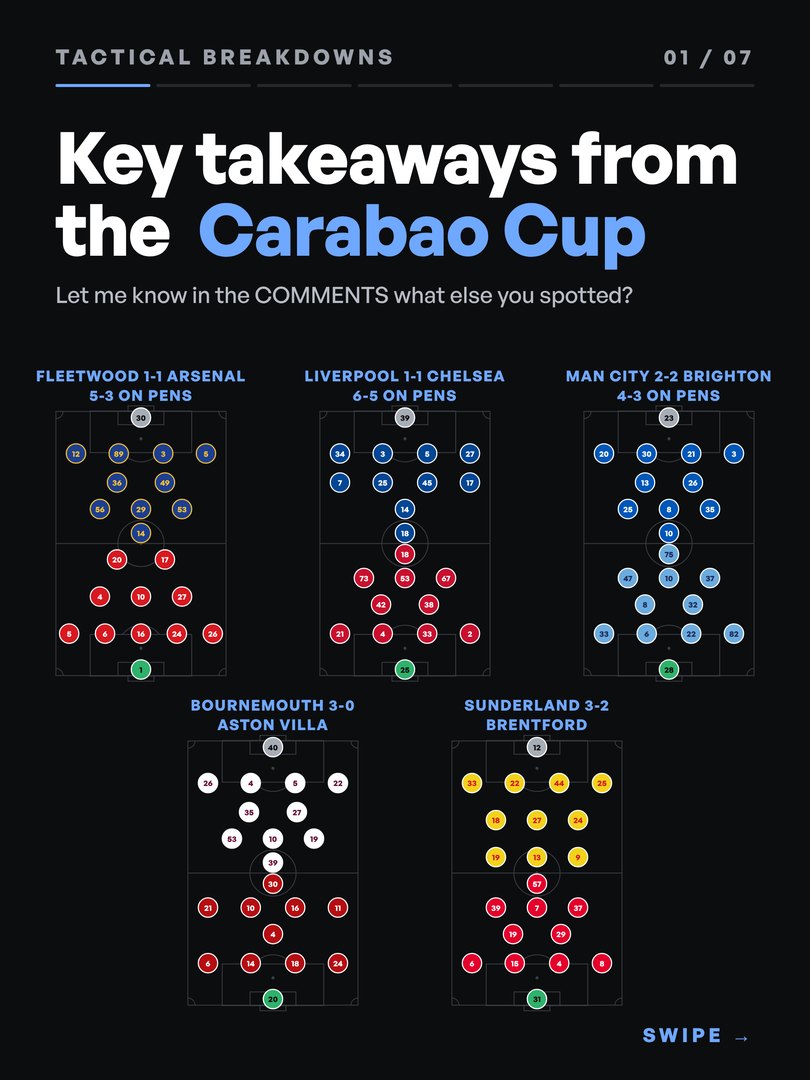
The breakdowns. Three of them. Carabao Cup: what caught my eye (Thu 29 Oct) was the moments from the cup round that stood out to me. How Spurs play out from the back (Fri 30 Oct) is the other side of this week’s lesson: Spurs’ shape, how they handle the press, the route they choose and the cover behind it, with a full blog to go with it. Then How Arsenal won at Anfield (Mon 2 Nov), the breakdown this issue started with. I put that one on LinkedIn too, as “Arsenal just know how to lock it down”.
Football explained. What a substitution tells you (Thu 29 Oct): how to read a change from the bench, and what to watch for straight after it.
Video. City’s left-back in the ten: why City’s left-back ends up playing as a ten, and what it does to the shape. Comment LEFTBACK on the reel and I’ll send you the full blog.
What I’ve been watching and listening to. My October Media Diet (Tue 3 Nov). The pick of the month is The Brighton Blueprint on BBC Radio 5 Live’s Football Daily, with Brighton’s sporting director Mike Cave on how data drives their recruitment, loans and sales. And if you want some extra homework for this issue, the match on the list is Brighton 3-0 Arsenal from September. Watch the first half for Brighton’s man-for-man press: every back pass was a trigger, and they won the ball nine times in Arsenal’s final third. Every link is on the site: Media I consumed this October.
The Tools are live. (Sat 31 Oct) Match Report Lite and Match Report Master are now in The Tools section, for when you want a finished, designed report instead of building your own.
Cheers,
Harry
The Debrief · Debrief 03
Debrief 03
How to read defensive pressure
Who goes first, what sets them off, and where the ball goes next.
By Harry Lowe · 5 November 2026 · 8 min read
Read the article →Introduction
Hey, legends 🤙🏼
Every week someone on TV says “they pressed well”. It’s become one of those lines that sounds like analysis but tells you nothing.
Pressing isn’t just running at the ball. It’s a plan: a signal everyone waits for, one player who goes first, others who follow, and a place you want the ball to end up. When it works, it looks like the other team made a mistake.
That’s exactly what happened at Anfield. So this week we start with that goal, then go through the six things I look for in any press, then you get to break it down yourself.
01 · Tactical breakdown
How Arsenal’s press won it at Anfield
Sixteen minutes in at Anfield, Alisson takes a goal kick short and tries to find Jacquet. The pass is loose, and Ødegaard is already there. A few passes later, Havertz taps in at the back post. That’s the only goal of the game.
Everyone labelled it a goalkeeping error. Look closer and it’s the press that caused it.
- Tzolis
- Pay close attention to Tzolis. His trigger is the pass from Van Dijk, and he arcs his run so Alisson has to play centrally, cutting out the easy pass to Jacquet on the outside. That’s the curved run from number 2 below.
- Ødegaard
- Then Ødegaard. He had a player-marking job on Mac Allister, staying tight so he couldn’t receive without pressure. When Mac Allister dropped to support Alisson, Ødegaard went with him, which put him right on the loose pass. Two roles in one movement. That’s number 4.
- The takeaway
- You don’t need to win the ball every time. You need to be in the right place for the one time the pass isn’t perfect.
Three more moments from the same game
Shut the middle, show them wide
The middle is shut, so the ball goes wide to Kerkez.
Let them cross, win the header
Kerkez’s outswinger, Konsa and Gabriel win it.
Beat the press by going long
Raya over the press to Havertz, with Madueke and Tzolis running off him.
02 · Lesson
Six things to watch, in order
Pressure is one of the first things I look at when a team doesn’t have the ball. It tells you how they want to defend: how high, how quickly and with how many players. “They pressed well” says very little. The useful questions are what set it off, who went first, who followed and where the ball ended up.
1. The trigger: find what sets the press off
The team waits, then suddenly goes. Several players move forward at the same moment, not one by one. That’s the first clue that it’s a plan and not just energy.
The signal is usually one of four things: a pass back to the keeper, a heavy touch, a pass out to the touchline, or a player receiving with their back to goal. All four have the same thing in common. The player on the ball has fewer options and less time than a second ago, so that’s the moment to go.
Why does it matter? A press that goes at the right moment catches the opponent half-turned with the ball under their feet. A press that goes all the time runs out of legs by the hour mark. At Anfield, Tzolis’s trigger was Van Dijk’s pass back to Alisson.
For an analyst, the trigger is what makes a press predictable. Write it as one line a coach could use: “When the ball goes back to the keeper, the 9 goes.”
2. The first player: who goes first, and how
One player always leads, and the run is rarely straight. Watch it bend.
The first presser closes the ball while keeping a pass behind them blocked with their body, usually the one into midfield. That’s the curve: they come from the inside out, so the player on the ball can only go one way. Their angle decides which side the opponent plays to, and it pushes the ball where the pressing team wants it.
A good first run does the work of two players. It pressures the ball and closes a pass at the same time. That’s exactly what Tzolis did. He arced his run so Alisson had to play centrally and lost the easy pass to Jacquet on the outside.
When you watch, don’t just ask “did he get there?”. Ask “what did his run take away?”.
3. The number ten: where does the ten start?
Out of possession, look for the number ten moving from behind the striker to level with them.
The ten and the striker go together, one on each centre-back. Neither centre-back has a free pass to the other, so the back line can’t shuffle the ball across to escape. Against a team that builds with two centre-backs, it’s two against two at the front.
What it gives the pressing team is direction. With the pass across shut, the ball has three places to go: back to the keeper, out to a full-back, or long. Back to the keeper is often the trigger again, out wide is where the trap waits, and long is a contest the defenders are set up to win.
If the ten stays behind the striker, look at what happens instead. Usually one centre-back has all the time in the world, and the press is over before it starts.
4. The man-marker: find the player following one opponent
In midfield, look for one player going wherever a particular opponent goes, even out wide or deep into their half.
Instead of holding a zone, that midfielder stays tight to their player and follows them across the pitch. It’s normally aimed at the opponent’s best passer, or the player who links the build-up, the one the keeper and centre-backs are looking for when they’re under pressure.
That’s what lets the press go higher. The free player the build-up is looking for has someone attached to him. At Anfield, Ødegaard’s job was Mac Allister. When Mac Allister dropped to help Alisson, Ødegaard went with him, and that’s why he was standing on the loose pass. Two roles in one movement.
A good way to spot it: pick the opponent’s main midfielder and watch who’s closest to him every time the keeper has the ball. If it’s the same player every time, you’ve found your man-marker.
5. The back line: check the players behind the press
When the front players press, look behind them. The defenders should be moving up at the same time, sometimes as far as halfway.
The back four step up together and keep the gap between them and the midfield small. One player pressing alone is easy to play around. If the team behind stays deep, a gap opens between the lines, and one pass into that space beats the whole press.
When the back line goes with it, the team stays short. There’s less space to play through, and a forward chasing a long ball is often caught offside or still a long way from goal when it lands.
This is the part most people never look at, because the camera follows the ball. If you can, watch it back on a wide angle. The press is only as good as the line behind it.
6. The trap: watch for the touchline trap
Some teams want you to pass out wide. They leave the full-back open on purpose, then close in with three players as soon as the ball arrives.
The pass to the full-back is the trigger. The winger, a midfielder and the full-back close in together, while others block the pass back inside. The touchline works as an extra defender: the player on the ball has half the pitch they’d have in the middle, and no way out behind them.
Win the ball there and it often leads straight to a chance, because the other team’s defence is spread out and moving the wrong way.
To spot it, look at who’s free before the pass and who’s free after it. If the full-back looked free and then suddenly isn’t, that’s a trap, not a gap.
03 · Free resource and task
Playing Out From the Back
That Anfield goal is a press beating a build-up. Playing out from the back is the free Portal task for the other side of it: how a team tries to move the ball away from its own goal while the opponent presses.
It breaks every build-up into five parts:
The five parts- Starting shape. Where are the keeper and nearby defenders? Who gives width, depth and a central option?
- Pressure. Who engages the ball, and who protects a passing route?
- Route. Does the team play through, around or beyond the pressure, carry it, or recycle?
- Reception. What can the receiver see and do next? Who offers another angle?
- Outcome and cover. Is the next action controlled, contested or stopped? What space is exposed if the ball is lost?
Then it walks you through one worked example and gives you a free PowerPoint template, with pitches to draw on, to identify, show, explain and propose your own.
Task: break down the Anfield goal kick, then find your own
Part 1: use the template on the goal. Download the template from the resource and fill it in for Liverpool’s goal kick in the 16th minute. Here’s a start:
- Starting shape
- Alisson goes short. Liverpool’s centre-backs are split and the full-backs are already high or wide, ready to build.
- Pressure
- Tzolis’s trigger is Van Dijk’s pass. He arcs his run to force Alisson central. Ødegaard is tight on Mac Allister.
- Route
- Short, to Jacquet, but the pass is an extra yard off.
- Reception
- Ødegaard gets there first.
- Outcome and cover
- A turnover with Liverpool out of shape. A few passes later, Havertz scores.
Finish it with What, How, Why. What happened, how Arsenal’s press made it happen, and why Liverpool were so exposed when they lost it.
Part 2: flip it round. In the same game, Arsenal faced Liverpool’s press and Raya went long to Havertz, Tzolis or Madueke instead. Use the same five parts on one of those moments. Why would a team choose to go long rather than play out?
Part 3: your own match. Pick one team this weekend and watch the first 20 minutes when they don’t have the ball. Every time they press, note the time, the trigger, who went first and where the ball went next. After five or six, look for the pattern: same trigger, same first player, same outcome? Then pick the best one and run it through the template.
Match Report Lite and Match Report Master are in The Tools, with templates for PowerPoint and Keynote ready to fill in.
04
My week
Over 300 of you have joined since we launched. Genuinely didn’t expect that, so thank you. If there’s something you want me to cover, hit reply and tell me. I read every one.
Debrief 04 is on the way, landing in your inbox next Thursday...
A busy week. Here’s everything that went out since the last Debrief, and what each one was about.
The breakdowns. Three of them. Carabao Cup: what caught my eye (Thu 29 Oct) was the moments from the cup round that stood out to me. How Spurs play out from the back (Fri 30 Oct) is the other side of this week’s lesson: Spurs’ shape, how they handle the press, the route they choose and the cover behind it, with a full blog to go with it. Then How Arsenal won at Anfield (Mon 2 Nov), the breakdown this issue started with. I put that one on LinkedIn too, as “Arsenal just know how to lock it down”.
Football explained. What a substitution tells you (Thu 29 Oct): how to read a change from the bench, and what to watch for straight after it.
Video. City’s left-back in the ten: why City’s left-back ends up playing as a ten, and what it does to the shape. Comment LEFTBACK on the reel and I’ll send you the full blog.
What I’ve been watching and listening to. My October Media Diet (Tue 3 Nov). The pick of the month is The Brighton Blueprint on BBC Radio 5 Live’s Football Daily, with Brighton’s sporting director Mike Cave on how data drives their recruitment, loans and sales. And if you want some extra homework for this issue, the match on the list is Brighton 3-0 Arsenal from September. Watch the first half for Brighton’s man-for-man press: every back pass was a trigger, and they won the ball nine times in Arsenal’s final third. Every link is on the site: Media I consumed this October.
The Tools are live. (Sat 31 Oct) Match Report Lite and Match Report Master are now in The Tools section, for when you want a finished, designed report instead of building your own.
Cheers,
Harry